Back To A Guide to Digital Marketing for Manufacturers
Lead Generation Strategies Using Google Ads
In manufacturing businesses, generating a consistent flow of qualified leads can be one of the biggest challenges.
Like many businesses, whilst referrals from word of mouth and repeat customers are valuable, they are often not enough to support long-term growth. This is where effective Google Ads campaigns can make a real difference in attracting new customers and guiding them through the marketing funnel to the conversion stage.
Unlike other traditional advertising, Google Ads puts your business in front of potential customers who are already actively searching for the products or services you offer. They already know what they want, have high buying intent and are ready to decide on a service provider. Whether they’re looking for industrial equipment or bespoke manufacturing solutions, through efficient targeting, your business can appear at the exact moment they need it most.
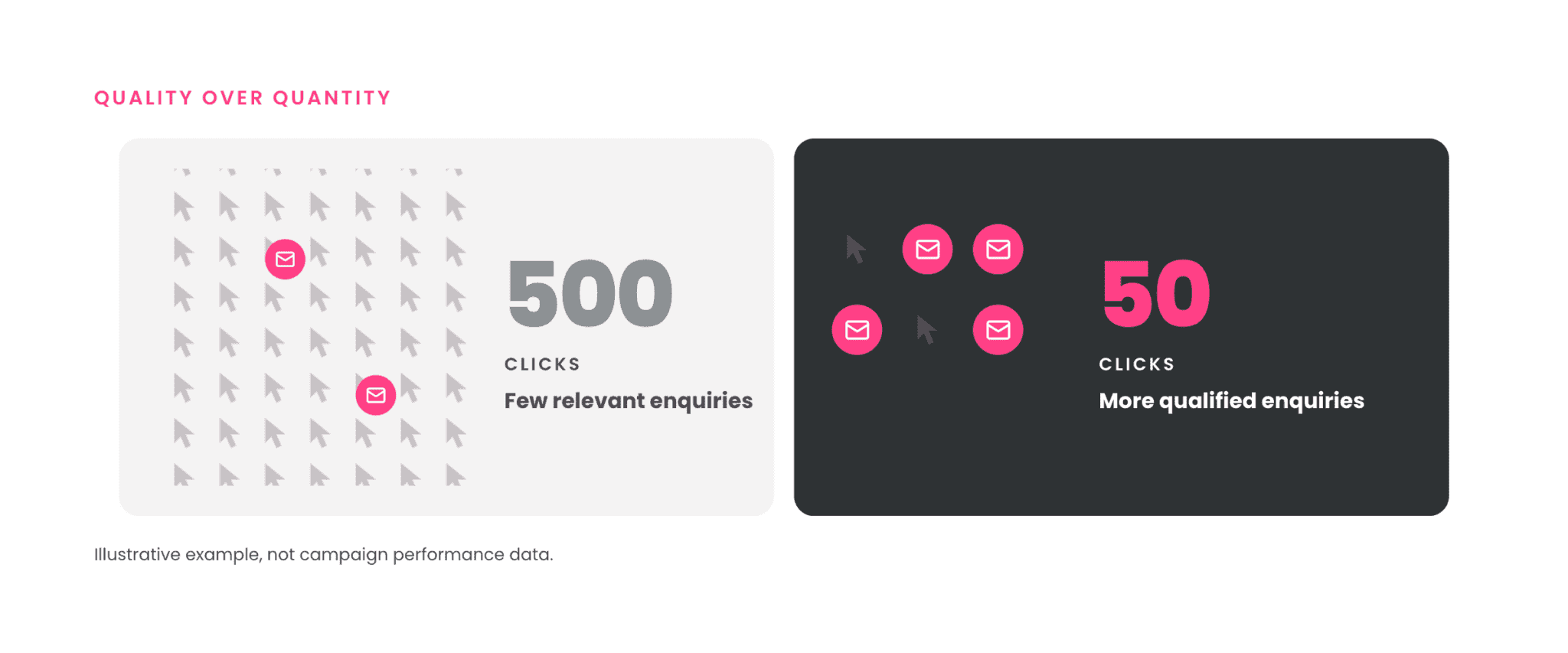
However, there is an important distinction between generating more leads and generating the right leads. A successful campaign should reflect the type of work your business actually wants to win, considering factors such as margins, production capacity, location and long-term customer value. More enquiries do not automatically mean better performance.

Why Google Ads Works for Manufacturers
Manufacturing purchases often begin with an online search. Engineers, procurement managers, operations teams, and business owners regularly use Google to find suppliers, compare services, and request quotes for upcoming projects.
Unlike other channels such as social media advertising, where you’re interrupting someone’s browsing experience, Google Ads reaches people who already know what they’re looking for. This means the traffic is typically much more qualified and likely to convert.
Google Ads provides manufacturers with complete control over budgets and targeting. Whether you’re targeting local businesses or customers nationwide, you can scale campaigns based on your needs, whilst tracking enquiries generated. It’s often a good channel for those needing a more instant boost in enquiries vs longer-term channels such as SEO.
 Lead Generation Strategies Using Google Ads
 Lead Generation Strategies Using Google Ads
1. Target High-Intent Manufacturing Keywords
Successful campaigns begin with choosing the right keywords. Rather than targeting broad terms with high search volume, manufacturers should focus on keywords that demonstrate strong purchase intent. Someone searching for “sheet metal fabrication company” or “precision CNC machining services” is much closer to making an enquiry than someone searching for general manufacturing information.
Don’t forget to build a comprehensive negative keyword list to exclude irrelevant searches that waste advertising spend. Regular keyword reviews ensure your campaigns continue attracting qualified leads rather than low-quality traffic.
2. Create Landing Pages That Convert
One of the biggest mistakes manufacturers make is sending paid traffic to their homepage or generic landing page. Instead, every Google Ads campaign should direct visitors to a dedicated landing page that closely matches the search intent behind the ad.
A high-converting landing page should include:
- A clear headline that reflects the ad
- A concise outline of your services
- Industry experience and certifications
- Customer testimonials or case studies
- Strong calls to action
- A simple contact form or contact details
The easier you make it for potential customers to enquire, the higher your conversion rate is likely to be.
3. Write Industry-Specific Ad Copy
Potential customers aren’t looking for generic marketing messages; they want confidence that you understand their requirements. Instead of using vague headlines such as “Quality Manufacturing Services,” focus on your USPs and what sets your business apart. Highlight benefits like:
- Fast lead times
- Industry expertise
- UK manufacturing
- Competitive pricing
- Bespoke solutions
Tailored ad copy generally achieves higher click-through rates while attracting more relevant enquiries.
4. Optimise for Leads, Not Clicks
Whilst ensuring campaigns are driving traffic to the site is an important element of running a successful campaign, it’s also important to ensure you’re not just optimising for clicks and that campaigns are also optimised for leads. The real objective is generating qualified enquiries that lead to sales.
Campaigns should track meaningful conversions to your business, such as:
- Quote requests
- Contact form submissions
- Telephone calls
- Consultation bookings
Conversion tracking allows you to identify which keywords and ads are generating the highest-quality leads. This data helps you invest more budget into what’s working while reducing spend on underperforming campaigns. Over time, this continuous optimisation improves both lead quality and return on ad spend.
5. Continuously Test and Improve Campaign Performance
Google Ads isn’t a platform you should set up once and then allow to tick over. The most successful campaigns are constantly refined using performance data. Testing and reviewing whats working well and what isn’t is the best way to be able to optimise campaigns to achieve the best results.
Areas worth testing include:
- Ad headlines
- Calls to action
- Landing page layouts
- Keyword match types
- Bid strategies
- Audience targeting
Even small improvements to click-through rates or conversion rates can significantly reduce your cost per lead over time, meaning you’re able to achieve more conversions for your monthly budget. Regular optimisation and campaign strategy management are two of the reasons many businesses choose to work with a specialist manufacturing marketing agency that understands both Google Ads and the manufacturing sector.
Common Google Ads Mistakes Manufacturers Make
Even well-designed campaigns can underperform if common mistakes aren’t addressed.
Targeting Broad Keywords
Broad keywords often generate high traffic, but poor-quality leads. Focusing on specific manufacturing service keywords, hyper-relevant to your business, usually delivers better results.
Sending Traffic to the Homepage
Your homepage serves many purposes. Landing pages should have one objective: converting visitors into enquiries.
Ignoring Negative Keywords
Without negative keywords, your ads may appear for irrelevant searches that quickly use up your advertising budget.
Not Tracking Conversions
If you don’t know which campaigns generate enquiries, you can’t accurately measure return on investment or improve performance.
Stopping Optimisation Too Early
Google Ads requires ongoing refinement. Markets change, competitors adjust their campaigns, and customer search behaviour evolves. It’s key to continue optimising campaigns whilst they’re live.
Why Work With a Manufacturing Marketing Agency?
Managing successful Google Ads campaigns requires specialist knowledge and skill. A specialist manufacturing marketing agency understands the unique buying journey of customers, the technical language used by manufacturing businesses, and how to attract high-value enquiries rather than simply increasing website traffic.
An experienced agency can help you:
- Build highly targeted PPC campaigns.
- Improve Quality Scores.
- Reduce wasted ad spend.
- Increase conversion rates.
- Generate a consistent pipeline of qualified leads.
For manufacturers competing in niche or highly competitive markets, expert campaign management often delivers significantly better long-term results.
At Peaky, we believe an agency’s role should go further than managing bids and reporting on clicks. We want to understand what a good lead actually looks like for the business and which jobs are most profitable.
Those answers should influence campaign strategy. A PPC account can look well optimised in a dashboard and still fail to make a meaningful difference to the wider business. That is why it’s so important to look beyond platform metrics and consider the commercial reality behind the numbers.
FAQ's
Is PPC worth it for manufacturers?
Yes. PPC for manufacturers is one of the fastest ways to reach businesses actively searching for industrial products and services. When campaigns are properly managed, they can deliver highly qualified leads with measurable results.
However, we would not assume PPC is automatically right for every manufacturer. The opportunity depends on factors such as available search demand, click costs, conversion rates and the value of a customer.
How much should manufacturers spend on Google Ads?
Budgets vary depending on your industry, competition, and objectives. Keyword Research is the best way to understand what an appropriate budget should be. IIt’s generally better to start with a realistic monthly budget that provides enough data for optimisation before increasing spend.
How long does Google Ads take to generate leads?
Unlike SEO, Google Ads can begin generating traffic almost immediately after campaigns launch. However, ongoing optimisation is essential for achieving the best performance.
Should manufacturers use SEO and PPC together?
Absolutely. SEO builds long-term organic visibility, while PPC generates immediate traffic and enquiries. Combining both strategies creates a more balanced and sustainable digital marketing approach.
We also believe the two channels should actively inform each other. PPC search term data can uncover commercially valuable topics for SEO, while strong organic content and landing pages can support paid campaign performance. They are far more effective when they are not managed separately.
Looking for a manufacturing marketing agency?
If you’re looking for a digital marketing specialist to help you get started with Google Ads, or perhaps you’re already running campaigns, but are looking for an agency to take your campaigns to the next level. Get in touch with our team today to see how we can support.