Back To A Guide to Digital Marketing for Manufacturers
How to Create Manufacturing Content That Converts
Many manufacturing businesses invest time and money into creating content, yet struggle to generate meaningful enquiries from it.
The challenge isn’t usually a lack of expertise; in fact, manufacturers often possess a huge amount of technical knowledge, industry experience and insight that potential customers would find valuable. The problem is translating that knowledge into content that potential customers are actively searching for online.
Effective content marketing for manufacturing companies isn’t simply about publishing blogs or keeping your social media profiles active, it’s about creating useful, search-led content that addresses customer challenges, answers key questions and guides potential customers through the buying journey.
Key Takeaways
- Manufacturing content should solve customer problems, not just promote products.
- Search intent should drive your content strategy.
- Content should support every stage of the buying journey, from research to enquiry.
Why Content Marketing Matters for Manufacturing Companies
So, why does it matter? When done correctly, content can increase visibility in search engines, build brand awareness in key markets, establish trust with new potential customers and generate qualified leads over time.
Manufacturing buyers often carry out extensive research before speaking to a supplier. Whether they are looking for components, machinery, specialist services or technical expertise, potential customers want to understand their options before making contact, especially when it comes to a brand that’s new to them.
If your business isn’t appearing during this research phase, you could be losing opportunities to competitors who are already providing the answers your potential customers are looking for.
A strong content marketing strategy can help manufacturing companies:
- Increase organic visibility in search results
- Build credibility within their specialist sector
- Educate potential customers & demonstrate technical expertise
- Support sales conversations
- Generate qualified inbound enquiries
For many manufacturers, content marketing becomes one of the most cost-effective lead generation channels over time. So, how can you create manufacturing content that actually converts?
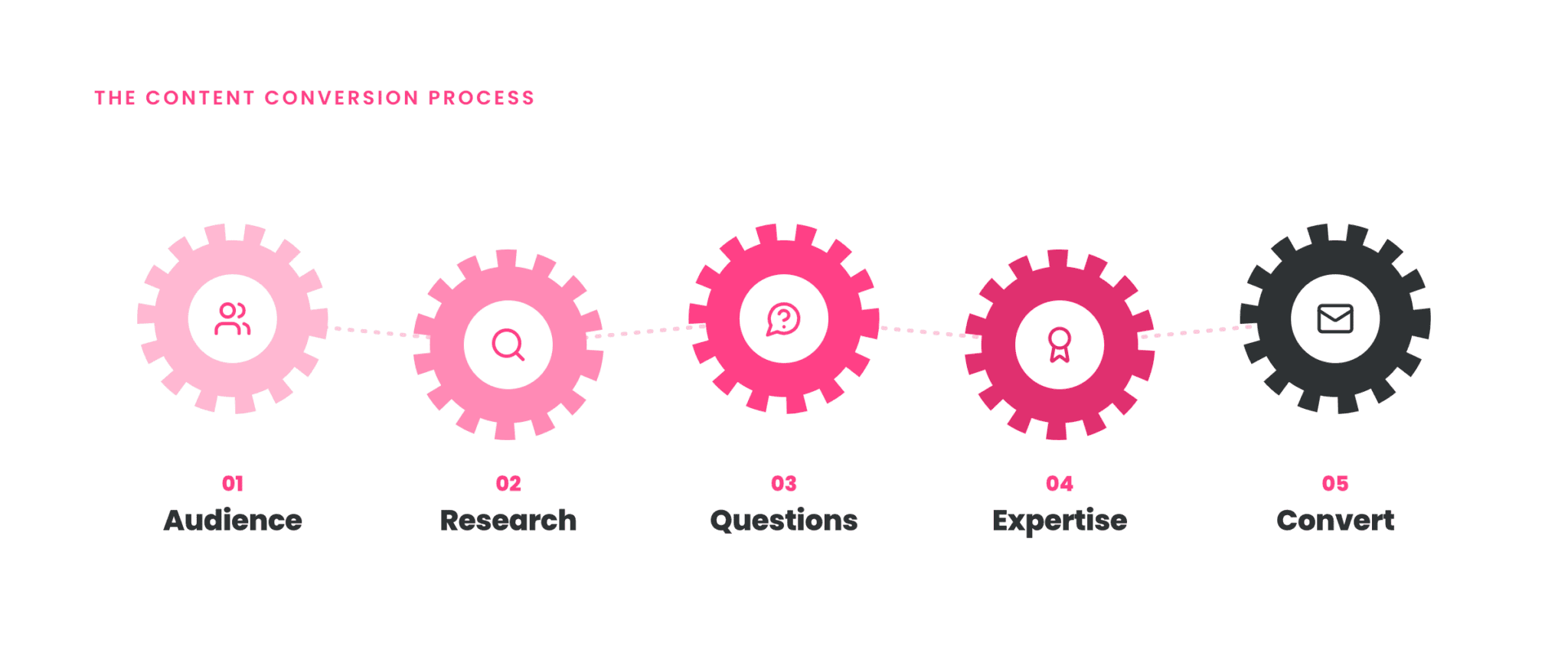
How to Create Manufacturing Content That Converts
Step 1: Understand Your Audience
Before creating any content, identify who you’re trying to reach. Manufacturing companies often need to speak to several different decision makers and influencers within the business, including operations directors, business owners and project managers.
Each audience will have different questions, priorities and pain points. For example, an engineer may be searching for technical specifications, whilst a procurement manager may be focused on reliability, cost and lead times.
Understanding your audience helps ensure your content speaks directly to their needs.
Step 2: Conduct Research
Research should form the foundation of your content strategy. Rather than guessing what customers want to know, use digital marketing tools to identify the terms people are actively searching for.
Looking beyond high-volume keywords and identifying opportunities that indicate strong buying intent allows you to create content that aligns with real search demand.
For example, a broad keyword such as “baler machinery” may be highly competitive. However, more specific searches such as “cardboard baler machinery for warehouses”, “vertical vs horizontal baler machinery” or “how to choose the right baler for your business” may reveal clearer customer intent.
Researching competitors will help you to identify where the gaps in the market are that you can capitalise on, but also what your future customers will also be seeing during their research phase.
For example:
- What topics are already being covered
- Where content gaps exist
- How detailed your content need to be
- What your potential customers are seeing during their research phase
The goal is not to copy competitors. It is to identify where you can create something more useful, more specific and more aligned with your customers’ needs.
Step 3: Create Content Around Customer Questions
The highest-converting manufacturing content often answers specific customer questions.
For example, For a waste systems company, this could include questions around choosing the right equipment, reducing waste collection costs, understanding space requirements or comparing different types of balers and compactors.
Useful content topics could include:
- What type of baler is right for my business?
- What is the difference between a vertical baler and a horizontal baler?
- How much space do I need for waste handling equipment?
- How can a business reduce waste collection costs?
- Should I rent or buy waste management equipment?
- What affects the cost of a commercial waste system?
This type of content works because it meets potential customers at the point where they are actively looking for guidance. It also positions your business as an expert, helps to build trust and nudges customers through the funnel towards a purchasing decision.
Step 4: Demonstrate Real Expertise
For customers investing in brands they’ve not come across before, trust trumps everything, especially in the manufacturing industry where decisions often involve risk. This is where your content should demonstrate genuine expertise. Industry experience is key, so use it to your advantage.
Include:
- Case studies
- Project examples
- Customer success stories
- Technical insights
- Industry commentary
- Original data where possible
- Accreditations and certifications
As AI-generated content becomes more common, genuine expertise is becoming a bigger differentiator in search results. Including real experience within your content is a great way to show why potential customers should use your business over your competitors.
Step 5: Include Clear Conversion Opportunities
Many manufacturing companies create great content, but fail to convert users into enquiries because there is no clear direction on what we’re trying to achieve with the content. Every piece of content should include a logical next step or opportunity for conversion
Examples include:
- Request a quote
- Book a consultation
- Download a guide
- Speak to an expert
- View related services
The right CTA will depend on the intent of the page. A top-of-funnel guide may invite users to read a related article or download a resource. A more commercially focused article may encourage users to request a quote or speak to the team.
The goal isn’t simply to generate traffic, it’s to turn that traffic into enquiries.

Common Manufacturing Content Marketing Mistakes
Focusing Only on Products
Customers are often searching for solutions rather than products. Content should focus on the problems you solve, not just what you sell.
Writing for Internal Teams Instead of Customers
Technical accuracy is important, but content must remain accessible and useful to the intended audience.
Neglecting SEO
Even the best content won’t generate results if it can’t be found. Content should be supported by keyword research, internal linking and technical SEO best practice.
Publishing Inconsistently
One blog every six months is unlikely to drive meaningful growth, successful content marketing for manufacturing companies requires a consistent, long-term approach.

Should You Work With a Manufacturing Marketing Agency?
Many manufacturers struggle to balance content creation alongside day-to-day operations. Working with a specialist manufacturing marketing agency can help businesses:
- Develop a content strategy
- Conduct keyword research
- Create SEO-focused content
- Improve organic visibility
- Generate qualified leads
An agency should understand both manufacturing audiences and digital marketing best practice, helping bridge the gap between technical expertise and effective online marketing.
Not sure where to start with your manufacturing content strategy? Get in touch with our team today to see how we can help you identify the right opportunities, turn your technical knowledge into useful content and create a strategy that supports long-term growth.
FAQ's
What is content marketing for manufacturing companies?
Content marketing for manufacturing companies is the process of creating useful, relevant content that helps potential customers find your business, understand your expertise and move closer to making an enquiry. This can include educational articles, buying guides, technical resources, case studies and service-led content.
How often should manufacturers publish content?
Consistency is more important than volume. For most manufacturers, publishing one to four high-quality pieces of content per month is a strong starting point.
What content performs best for manufacturing companies?
Educational content, buying guides, technical resources, case studies and industry insights typically perform well.
How long does content marketing take to generate results?
Content marketing is a long-term strategy. Most businesses begin seeing meaningful SEO improvements within three to six months, with stronger results building over time.
Building a Content Strategy That Converts
Creating manufacturing content that converts requires more than simply publishing articles. The most successful strategies combine customer insight, keyword research, technical expertise and clear conversion opportunities.
As search behaviour continues to evolve, manufacturers that consistently produce useful, experience-led content will be best positioned to attract qualified traffic and generate new business.
If you’re looking to improve your content marketing strategy, working with an experienced manufacturing marketing agency can help you create content that not only ranks, but drives measurable commercial results.