What Is AI Visibility? A Beginner’s Guide
Nov 11, 2026
AI is everywhere, whether using it at work, researching a new product or looking for recommendations,…
by Rachael Pearce
Nov 11, 2026 AI Visibility, geo

AI is everywhere, whether using it at work, researching a new product or looking for recommendations, it’s quickly becoming a part of everyday life.
But while there’s plenty of conversation about what AI can do, there’s less discussion about what it’s actually saying, particularly when it comes to your business.
As more people turn to platforms like ChatGPT, Gemini and Perplexity for recommendations, understanding whether your brand is part of those conversations is becoming increasingly important. That’s where AI visibility comes in.
AI visibility is all about how easily your brand can be found, understood, and recommended by AI-powered platforms like ChatGPT, Google AI Overviews and Perplexity.
As more people turn to AI to research products, explore services, and find trusted recommendations, it’s becoming increasingly important that your business is part of those conversations.
AI visibility helps you understand where your brand is showing up, how you’re being represented, and how you compare to your competitors, so you can identify opportunities to get your business in front of the right people.

If you already invest in your SEO, or are exploring the best digital marketing starting point for your business, it might not be clear how AI visibility differs from traditional SEO.
Traditional SEO focuses on helping your website rank in search engine results, encouraging users to click through to your site. AI visibility takes this a step further, focusing on how AI platforms understand, reference, and recommend your brand within their responses. Rather than just competing for a position in search results, it’s about making sure your business is part of the answer when potential customers turn to AI for advice and recommendations.
Whilst traditional SEO isn’t going anywhere anytime soon, its also important to understand which methods of search people are using.
For example, someone looking for a digital marketing agency might search in two very different ways:
Traditional Google search (SEO) tends to be used for short, keyword-focused searches such as
“Digital marketing agency Cornwall”
Whereas AI search (GEO / AI Visibility) is used for longer, more conversational and specific questions
“Can you recommend a digital marketing agency in Cornwall that specialises in SEO and Google Ads, has experience working with B2B businesses and can help us generate more qualified leads?”

The key difference is that traditional searches tend to focus on keywords, with users reviewing the results themselves. AI searches are often more conversational, with users sharing their specific needs and asking for tailored recommendations.
This means brands need to do more than rank for relevant keywords. They need to give AI platforms enough context to understand who they are, what they offer and why they’re a good fit for a particular customer.
The way people search for information, products and services is changing, and AI is quickly becoming part of everyday life.
Research published by the UK Government earlier this year, AI Skills for Life and Work: General Public Survey Findings, found that 73% of the public had used AI in their day-to-day lives in the previous month, while 36% had used it in the workplace.
And it’s not just how we’re working that’s changing. It’s how we’re searching, too.
According to Which?, 51% of UK adults are using AI search tools to find products, services and advice online. As these platforms continue to develop and become more widely adopted, businesses have a growing opportunity to reach potential customers in a completely different way.
ChatGPT is currently leading the way, with the same Which? research finding that 47% of UK adults have used it to search the internet. Other platforms are also gaining traction, including Google Gemini (22%), Microsoft Copilot (21%) and Meta AI (18%).
Alongside these standalone AI tools, Google’s AI Overviews are bringing AI-generated answers directly into traditional search results, further changing how people discover businesses and access information.
So, what does this mean for businesses?
Being visible in traditional search results is no longer the whole picture. As more people turn to AI for answers and recommendations, businesses need to consider how their brand is being understood, represented and recommended across these platforms.
Investing in AI visibility, or Generative Engine Optimisation (GEO), isn’t about replacing your existing SEO strategy. It’s about building on those foundations to make sure your business has the best possible opportunity to be discovered, whether someone is searching on Google or asking ChatGPT for a recommendation.

If you’re curious to see how your brand is appearing in AI search, there are a few simple ways to get started.
Open your preferred AI platform and try asking some of the questions your ideal customers might ask when looking for a business, product or service like yours.
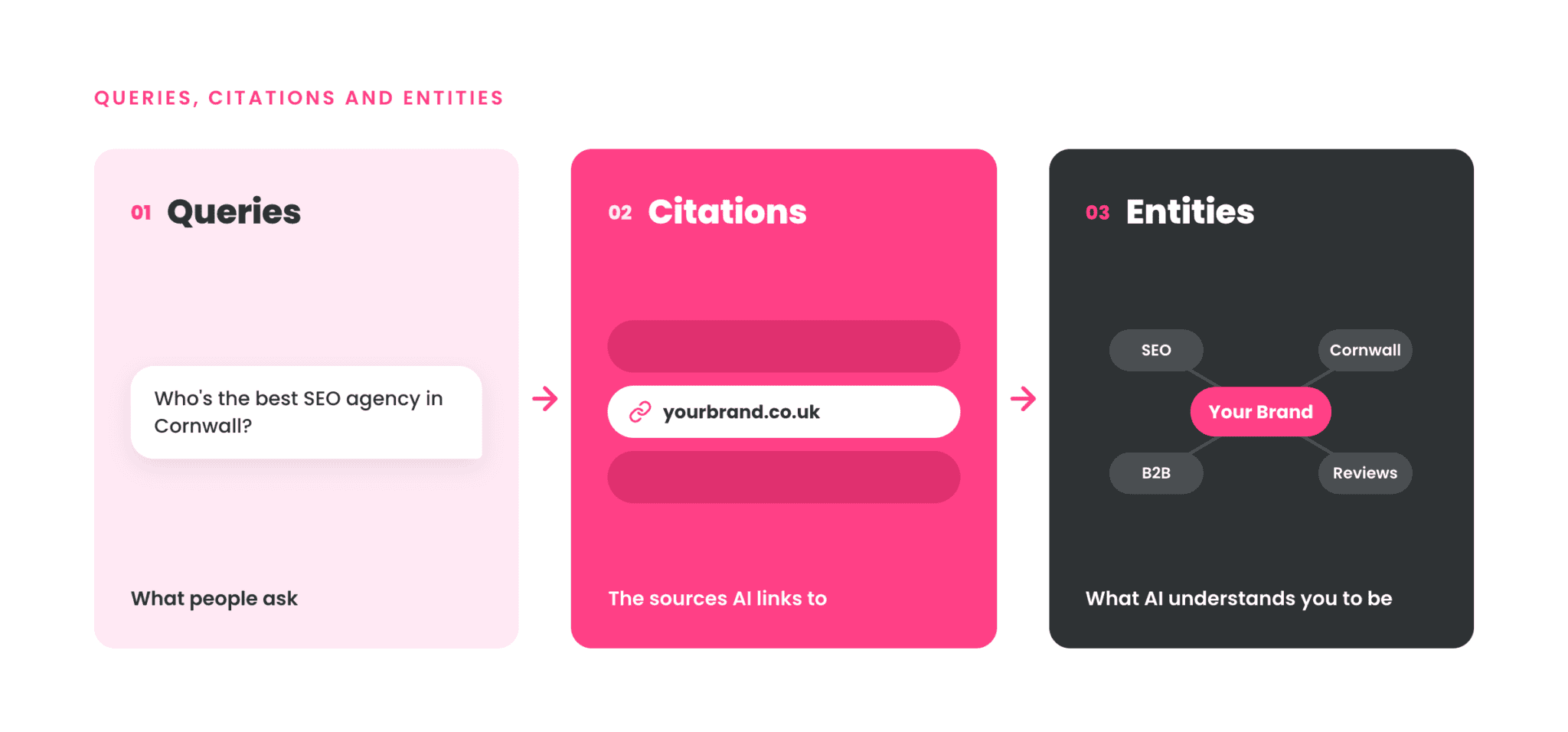
There are three key areas worth exploring:
Queries: Is your business being recommended?
Think about what your potential customers might ask AI when looking for your services. Try searching for 5–10 relevant questions without mentioning your brand.
What to check: Does your business appear in the recommendations? Which competitors are showing up instead?
Citations: Is your website being referenced?
Ask AI questions relating to your industry or expertise and look at the sources it uses to support its answers.
What to check: Is your website being cited? Which competitors are being referenced, and what content is AI using?
Entities: Does AI understand your business?
Ask AI directly about your business, including what services you offer, where you’re based, and what you specialise in.
What to check: Is the information accurate and up to date? Are there any gaps or areas of expertise it’s missing?
Following this, we’d suggest you make a note of your findings across different platforms. AI responses can vary, so this is only a snapshot of your visibility. Building a more complete picture takes time, with multiple queries, platforms and competitors to review. If you’d rather leave the legwork to us, our Free Ai Visibility Scorecard does the hard work for you, giving you a glimpse of where your brand stands and where the biggest opportunities for improvement lie.
Once you know how visible you are, you can start looking at how you improve it where needed. Improving your AI visibility isn’t just about creating more content. It’s about making sure AI platforms can find, understand and trust the information you share. Here are four key areas to focus on.
Make it easy for AI platforms to understand what your business does and the topics you’re an expert in. Use clear headings, relevant keywords, FAQs and well-organised content that answers the questions your potential customers are asking.
AI platforms often look for clear, relevant information they can use to build their responses. Keep your content helpful and direct, with concise answers to common questions, supported by useful detail, examples and evidence.
Just like traditional SEO, your website’s technical foundations matter. Make sure your pages are accessible, load efficiently and can be crawled by relevant search engines and AI search tools. Structured data (schema markup) can also help platforms better understand your business, services and content.
Building trust is an important part of AI visibility. Make sure your content demonstrates genuine expertise, with clear authorship, credible sources, and up-to-date information. Mentions, reviews and features on relevant third-party websites can also help strengthen your brand’s authority and online presence.
The key takeaway? Good AI visibility builds on strong SEO foundations. By creating helpful content, making your expertise clear and building credibility beyond your own website, you’re giving AI platforms more opportunities to understand and recommend your business.

AI is changing the way people discover businesses, research services and make decisions, and it’s a shift that’s worth paying attention to. The good news is that improving your AI visibility doesn’t mean starting from scratch. By building on your existing SEO foundations, creating genuinely helpful content and making sure your brand is clearly represented online, you’re already taking steps in the right direction.
If you’re curious to see how your business is performing in AI search, our Free AI Visibility Scorecard is a great place to start. We’ll help you understand where your brand is appearing, how you compare with competitors and where there might be opportunities to improve.
Brand awareness, business growth or a bigger and better ROI, our team of digital specialists are here to help you get the most from your brand. Let's start a new partnership today.
Nov 11, 2026
AI is everywhere, whether using it at work, researching a new product or looking for recommendations,…

Jul 31, 2026
Online content for professional services often falls into its own category completely. Far more sheltered from…

May 22, 2026
For years, SEO success has been measured by rankings. The goal was simple, reach position one,…