Back To How Renewable Energy Brands Generate Leads Online
The Renewable Energy Marketing Funnel Explained —
How Renewable Energy Brands Generate Leads Online
Renewable energy brands are operating in one of the most competitive digital markets in the UK. Solar and heat pump providers, EV infrastructure companies and green energy suppliers are all fighting to be seen in the same pool of increasingly research-heavy buyers and most of them are relying on the same handful of tactics: a bit of paid search, a Google Business Profile, and a "get a quote" form.
The issue isn’t a lack of demand. With the growing profile of the government’s warm homes plan and energy bill disruption in recent years, interest in renewables has never been higher. The problem is that most brands haven’t built a proper strategy for turning that interest into qualified leads. Traffic arrives, browses, and leaves because there’s often an overwhelming amount of information and no clear path guiding them from through the journey to enquiry.
This matters because renewable energy purchases are rarely impulse decisions. A homeowner comparing solar panel quotes or a business assessing commercial heat pumps will typically research for weeks, compare multiple providers, and want reassurance at every stage before they hand over contact details, let alone sign a contract.
In this article, we’ll walk through how a well-structured renewable energy marketing strategy turns website visitors into sales-ready leads, what the renewable energy marketing funnel actually looks like in practice, and the specific steps you can take to start generating more qualified enquiries online – because that’s the ultimate goal.
TLDR – Top Tips
The best renewable energy marketing strategies are those that combine channels, content and conversion tools a brand uses to guide potential customers from initial awareness through to a consultation or signed contract. In simple terms, it’s the intentional funnel that replaces “hope someone finds us” with “build a repeatable pipeline of leads.”
Key takeaways:
- Renewable energy buyers move slowly, so your funnel needs stages, not just a single contact form.
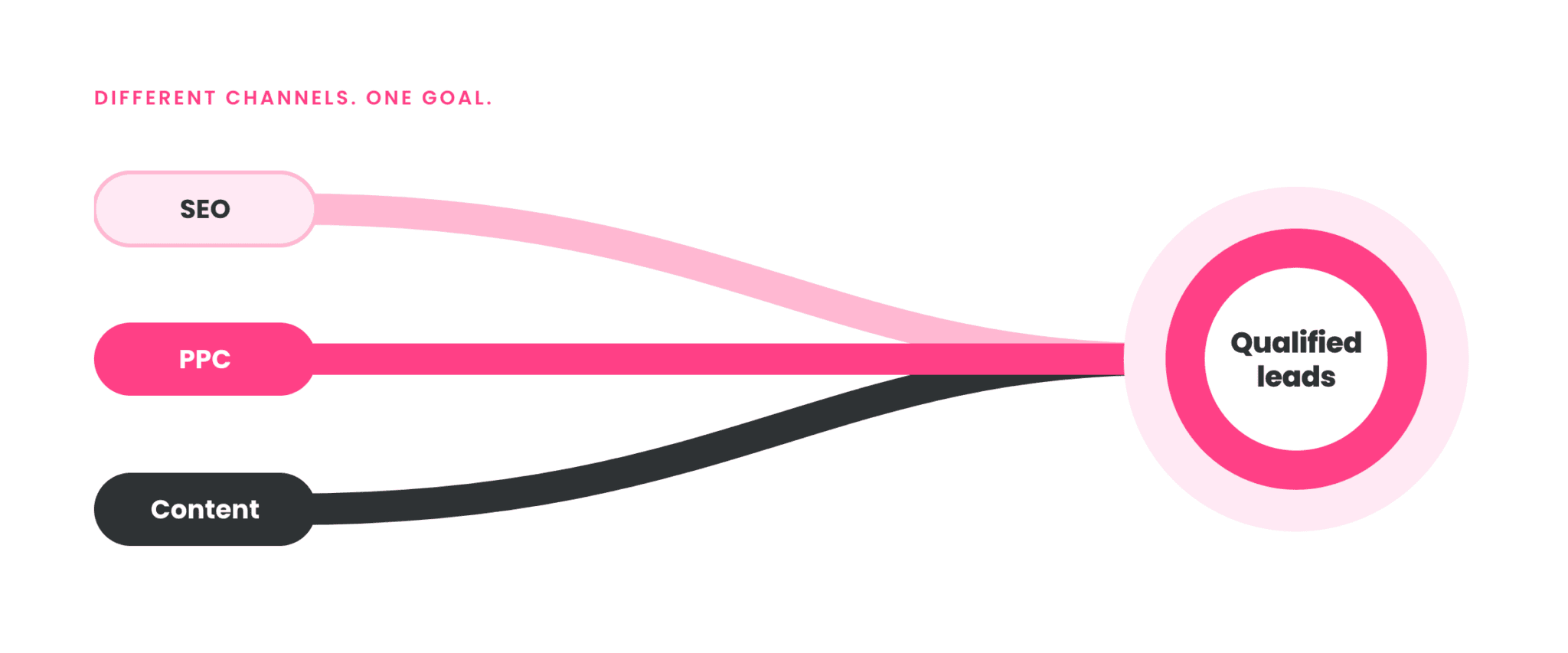
- SEO, PPC and content work together, it’s not really one or the other. SEO and content build trust over the long term, while PPC captures people who are ready to act now. Increasingly, that same content also needs to be structured clearly enough for LLMs like ChatGPT and Google’s AI Overviews to reference and recommend your brand potential buyers are making queries about renewable energy options.
- Lead quality matters more than lead volume; a smaller number of well-nurtured, well-qualified leads converts far better than a flood of unqualified form-fills from users with low intent.
If there’s one thing we’d encourage, it’s taking the time to understand your marketing funnel before investing more in paid media. The biggest opportunities often lie in improving what’s already there.
Understanding the Renewable Energy Marketing Funnel
The renewable energy marketing funnel is the journey a prospective customer takes from first hearing about your brand to becoming a paying customer. It typically has three broad stages:
Awareness (TOF): The customer realises they have a need (rising energy bills, a boiler replacement, a sustainability target) and starts searching for general information. Content here should answer broad query-based questions such as: “how much does solar cost UK”, “are heat pumps worth it”, “renewable energy grants”.
Consideration (MOF): The customer now understands their options and is comparing providers, technologies and pricing. This is where case studies, comparison guides, calculators and reviews do the heavy lifting.
Decision (BOF): The customer is ready to request a quote, book a survey, or speak to a specialist. Here, clear CTAs, fast response times and low-friction contact forms determine whether they convert with you or a competitor.
For example: a solar installer might publish a blog on “how solar panels work” (awareness), a cost comparison guide with a savings calculator (consideration), and a landing page with a “book your free survey” CTA (decision). Each piece of content has a specific job within the funnel; nothing is published without purpose.

Why a Strong Renewable Energy Marketing Strategy Matters
Without a strategy, most renewable energy brands end up creating content and running ads reactively, whether that’s chasing a competitor or keyword trends of the week. A structured approach means every channel, SEO, PPC, email, and paid social, has a defined role in the funnel. It also means every piece of content or campaign can be measured against a stage, not just against vanity traffic metrics.
A strong strategy also protects against one of the sector’s biggest cost risks: high-value, high-competition PPC keywords. Terms like “solar panel installation quote” can carry a significant cost-per-click and more and more are receiving less visibility due to AI overviews. Brands that can capture some of that same demand organically, through SEO-optimised, funnel-mapped content, are those that will be able to reduce their reliance on paid spend over time.
1. Understand Your Customer Journey
The most effective lead generation strategies begin with a clear understanding of how potential customers discover, research and ultimately choose a provider. Identifying where opportunities exist within that journey helps ensure your marketing is supporting every stage of the decision-making process.
2. Create Content That Builds Confidence
Different audiences need different information. From educational resources that answer early questions through to content that reinforces trust and credibility, each piece has a role to play in moving potential customers closer to an enquiry.
3. Build Visibility Beyond Paid Media
While paid media can capture demand quickly, long-term growth comes from being visible wherever your audience is searching. Investing in SEO, content and AI-ready search visibility helps create a more balanced acquisition strategy over time.
4. Reach Customers at the Right Time
Understanding when and where to engage your audience is just as important as the channels you use. A joined-up strategy ensures your marketing supports customers throughout their buying journey, rather than relying on a single touchpoint.
5. Make It Easy to Take the Next Step
Every enquiry is an opportunity. Clear calls to action, a seamless user experience and trust-building content all contribute to turning interest into meaningful conversations.
6. Keep Building Relationships
Not every visitor is ready to enquire immediately. Consistent communication and valuable content help keep your business front of mind until the timing is right.

Common Mistakes and Practical Tips
- Mistake: Treating every visitor the same, regardless of funnel stage.
Fix: segment landing pages and CTAs by intent. - Mistake: Relying solely on PPC.
Fix: invest in SEO and content in parallel to reduce long-term acquisition costs. - Mistake: Overly long or intrusive lead forms.
Fix: test shorter forms with progressive profiling. - Practical tip: Track leads through to installation/sale, not just form submission — this reveals which channels deliver customers, not just contacts.
Internal Resources
For more on the topics touched on in this guide, take a look at our related insights: our piece on supporting the customer journey through successful flow tactics expands on funnel-stage thinking, our SEO services page covers how organic visibility is built for competitive sectors, and our PPC services page explains how paid search fits alongside organic growth. You may also find our Circular&Co. case study useful as an example of how we’ve supported a sustainability-focused brand’s digital growth.
Ready to Build Your Funnel?
If your renewable energy brand is generating traffic but not enough qualified leads, it’s likely a funnel and strategy issue rather than a traffic issue. We can help you diagnose where prospects are dropping off and build the SEO, content and paid media system to fix it.
Frequently Asked Questions
What is the best channel for renewable energy lead generation?
There isn’t a single “best” channel, SEO builds long-term, lower-cost visibility, while PPC captures immediate, high-intent demand. Most successful renewable energy marketing strategies combine both.
How long does it take to see results from SEO for renewable energy companies?
Organic growth typically takes three to six months to show meaningful movement, depending on competition and existing site authority, though local SEO can move faster in less saturated areas.
Why are my renewable energy leads low quality?
This is usually a funnel design issue, broad, awareness-stage keywords or ads are sending unqualified traffic straight to a decision-stage form, with no consideration-stage content to filter and warm up genuine buyers.
Do renewable energy grants and incentives affect marketing strategy?
Yes. Grant and incentive changes shift search demand quickly, so content and PPC campaigns should be reviewed regularly to reflect current schemes and avoid promoting outdated offers.
Where to go from here.
Generating consistent, high-quality leads for a renewable energy brand comes down to one thing: building a funnel that matches how your customers actually buy. Awareness content earns attention, consideration content builds trust, and decision-stage pages convert that trust into enquiries. Layer SEO and PPC on top of that structure, and you have a genuine renewable energy marketing strategy, not just a collection of disconnected campaigns.
The next step is simple: audit your existing content and ads against the funnel stages above, identify the gaps, and start filling them. If you’d like an expert set of eyes on that process, get in touch with the Peaky Digital team.